

0.05s To form a first impression Peer-reviewed research: visitors judge a site's design in about 50 milliseconds — before they read a word.
75% Judge credibility by design Stanford's web credibility research — three quarters of users decide whether to trust you from how the site looks.
88% Won't come back after a bad visit Widely replicated UX finding: a frustrating first visit and most users never return. There's no second first impression.
0 Template themes in the building Every layout starts from your customer's journey, not a theme demo built for a dentist in Ohio.

Quick facts

Service area
Anchorage, Mat-Su Valley, Kenai Peninsula, Fairbanks, statewide
Deliverables
Customer journey map, wireframes, Figma design system, page designs, copy direction, content model
Typical project range
$4k–$15k depending on scope — every plan custom-scoped, design + build quoted together
Design phase timeline
3–5 weeks from kickoff to dev handoff; full site projects typically 6–10 weeks end to end
Tools
Figma for design and prototypes — you get the file, full ownership
What happens next
Design hands off to our web development team — same building, no telephone game

What's included

Everything between idea
and dev handoff.

Strategy documents and charts spread across a desk during a discovery session
01 / 06

Strategy first

Discovery + journey mapping

We map how your customers actually decide before we draw anything.

A working session with you plus real research: how people find you, what they compare you against, what makes them call. A fishing charter in Seward and a med spa in Midtown Anchorage have completely different buying journeys — the site has to match yours.

Customer journeysCompetitor reviewSite mapPage priorities
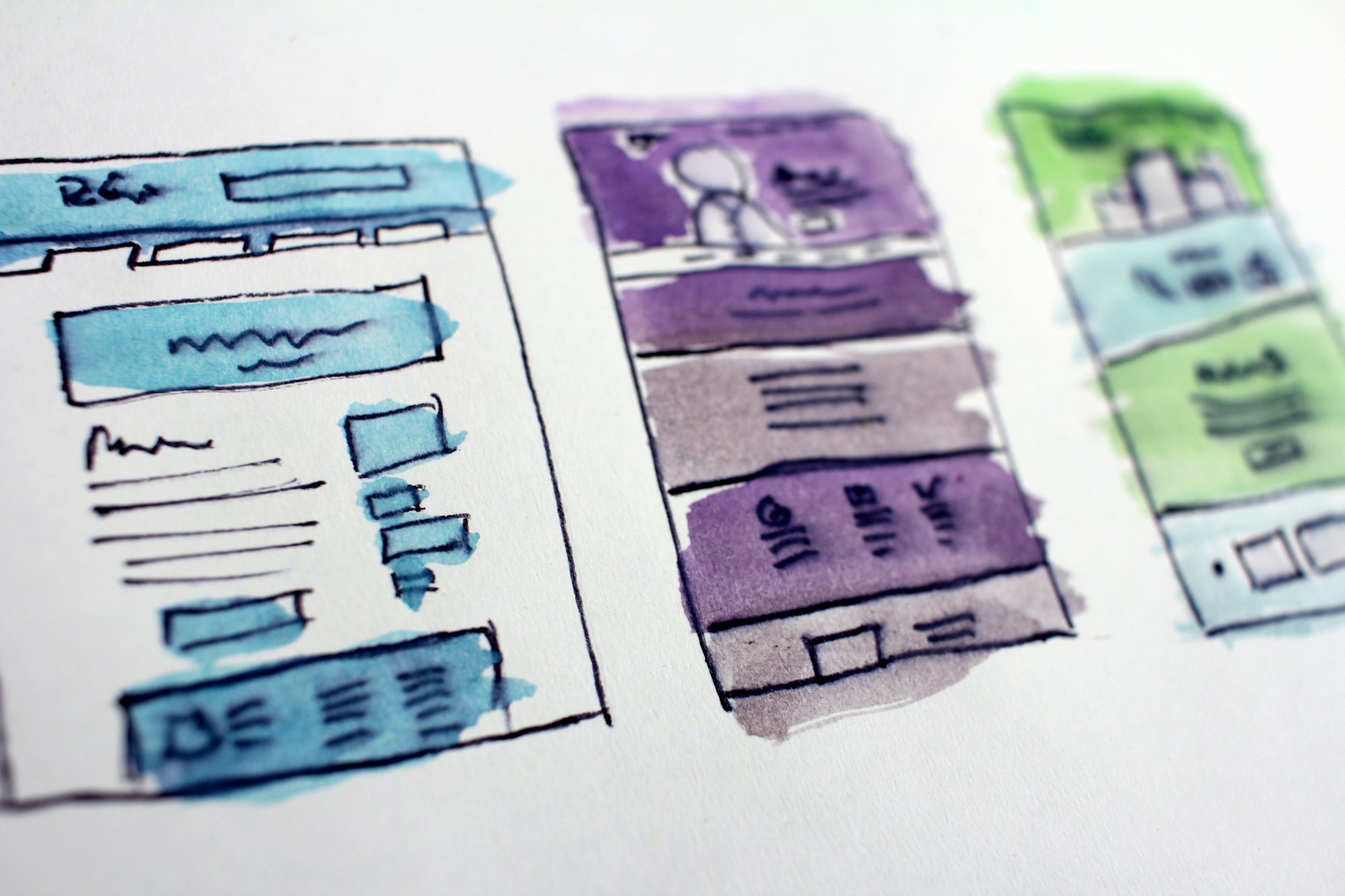
Hand-sketched website wireframes laid out beside a laptop
02 / 06

Structure

Wireframes + UX

Every page blocked out in grayscale before a single color shows up.

Wireframes settle the arguments that matter — what goes above the fold, where the phone number lives, how someone on a 3-bar connection in Talkeetna gets to the booking button. Cheap to change now, expensive to change after launch.

Page layoutsContent hierarchyMobile-firstConversion paths
Designer working on interface layouts at a workstation with a tablet
03 / 06

The look

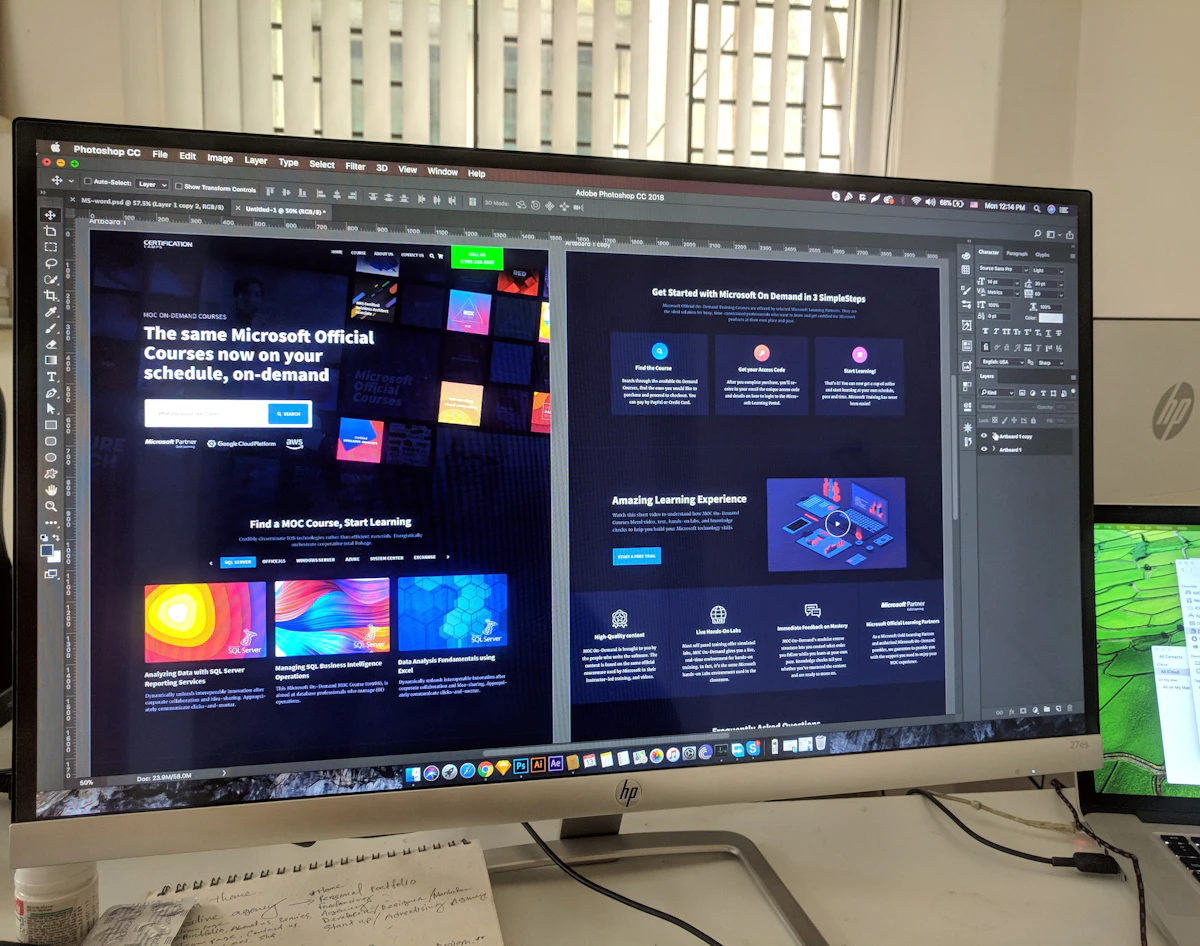
Visual design in Figma

Your brand applied to every page, pixel by pixel, in a file you own.

Full-fidelity designs for every template — desktop and mobile, light and hover states, real photography direction. You review clickable Figma prototypes, not static PDFs, so what you approve is what gets built.

FigmaDesign systemPrototypesPhotography direction
Writing headlines and page copy by hand next to an open laptop
04 / 06

Words

Copy direction

Design and words drafted together — never lorem ipsum boxes.

We write directional copy into the design as we go: headlines, value propositions, CTAs, the answers to the questions your customers actually ask. You refine it with us — nobody stares at empty gray boxes wondering what goes there.

HeadlinesValue propsCTAsTone
Reviewing structured documents line by line — content types mapped before the build
05 / 06

The skeleton

Content modeling

Structured content types, so the site grows without breaking.

Services, locations, case studies, FAQs, team members — we define the fields and relationships before build so adding your 9th service page later takes minutes, not a design change order. This is the part template sites always skip.

Content typesField schemasSEO structureScalability
Laptop showing front-end code — the design moving into development
06 / 06

No telephone game

Dev handoff

Design ships to our own dev team, annotated and complete.

Specs, spacing, breakpoints, interaction notes — handed to the developers down the hall, not thrown over a wall to a contractor in another timezone. When something needs a judgment call mid-build, the designer who made it is in the room.

Annotated specsBreakpointsInteractionsQA together

See web development

Where design fits

Design is step one.

01 / 03 Web development — the build The design ships to our dev team and becomes a fast, mobile-first site on WordPress, Shopify, or a custom stack. Same team, same building, zero handoff drift. 02 / 03 Branding — before the site If the logo, colors, and voice aren't settled yet, start there. A site designed on a shaky identity gets redesigned twice. 03 / 03 SEO & GEO — after launch The content model we design is built to rank — structured data, real headings, pages for the searches Alaskans actually type. SEO turns that structure into traffic.

How a project runs

Five weeks, no mysteries.

01.
Week 1 — Discovery + site map
Working session with you, competitor and customer research, journey mapping. Output: an agreed site map and page priority list before anyone designs anything.
02.
Week 2 — Wireframes
Every key template blocked out in grayscale, mobile and desktop. One review call, revisions inside the week — structural changes are cheap right now.
03.
Weeks 3–4 — Visual design + copy
Full-fidelity Figma designs with directional copy written in. You review a clickable prototype on your own phone, exactly the way your customers will see it.
04.
Week 5 — Content model + handoff
Content types defined, specs annotated, files packaged. The design walks down the hall to our dev team and the build starts — you've already seen exactly what's coming.
Design team working through page layouts on a whiteboard during a review session

Is this a fit?

Probably yes if:

Your site embarrasses you a little

It was fine in 2019. Now you hesitate before putting the URL on a truck wrap or a trade show banner. That instinct is usually right.

Customers say they couldn't find something

The price sheet, the booking link, the service area. If people call to ask things the site should answer, that's a design problem, not a customer problem.

You're an Alaska business that looks like everyone else

Same theme, same stock glacier photo, same layout as three competitors. Design is how you stop being interchangeable.

You want the thinking, not just the pixels

Journey maps, wireframes, and a content model are the difference between a site that works and a site that's merely pretty.

Probably no if:

Probably not if:

You need a site live this week

Real design takes weeks, not days. If the deadline is Friday, a clean one-pager on a template is the honest answer — and we'll tell you that on the call.

Your budget is under $4k

Below that, custom design math doesn't work. A well-chosen template configured carefully beats a rushed custom job — do that instead, and come back when you've outgrown it.

You want to skip the discovery work

"Just make it look nice" produces sites that look nice and sell nothing. If the journey mapping feels like a waste of your time, we're not your team.

The brand is still undecided

If the logo, colors, and voice are up in the air, site design will churn. Settle the identity first — that's a branding project, and it's cheaper to do in the right order.

Designed for here

Built for the audience
that lives here.

Your customers' backyard — the standard your site gets designed against

Questions, answered

Quick questions.

Dusk settling over a still Alaska lake below dark mountain ridgelines

→ Free 20-min design review

Send us your current site —
we'll tell you what we'd redesign
first, and why.
No deck, no pressure. Your site on the screen, three specific fixes, and an honest read on whether you need a redesign at all.